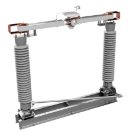
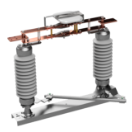
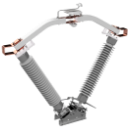
Aluminum Center Break
The original, non-cast aluminum center break switch design.
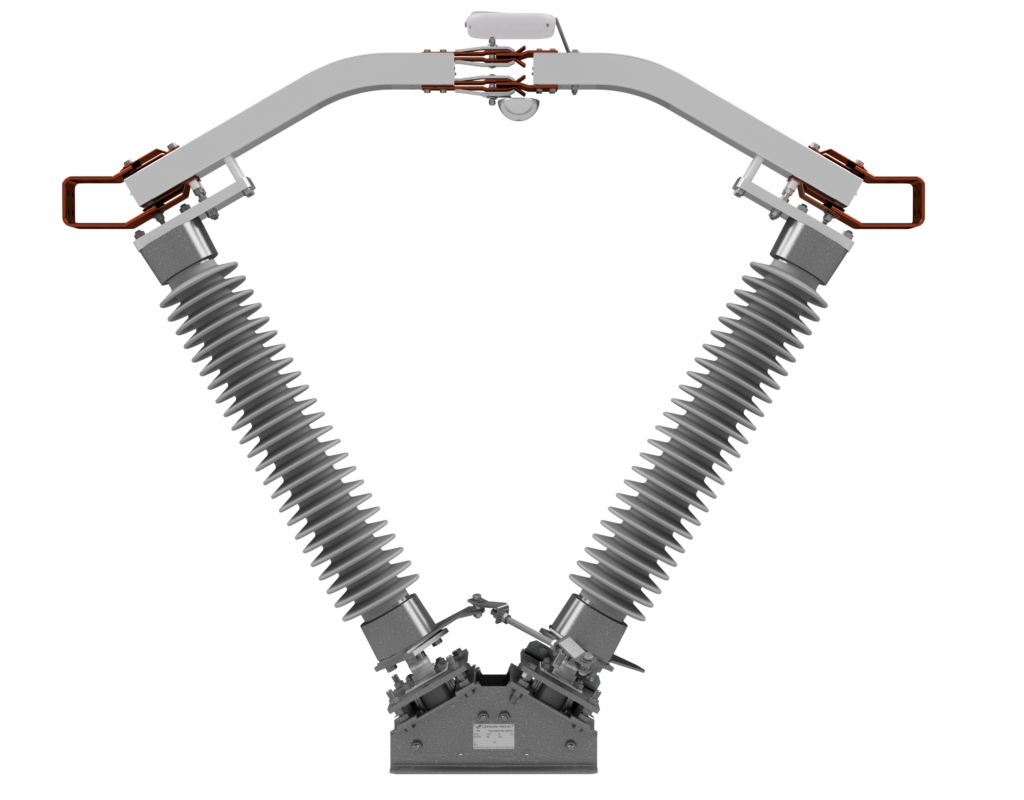
Parallel insulator design with tubular aluminum blades and unique, high pressure line contacts for efficient current transfer.
Aluminum CENTER Break Switch
CB-A
The Cleaveland/Price CB-A is a three-pole, group-operated, aluminum center break switch for installation in substation or transmission line locations.
Aluminum Center Break Features
- Unbreakable, non-cast copper terminal pads with NEMA
standard hole patterns on three faces - Braidless, high pressure line contacts at hinge
- Blade levelling adjustment studs
- Single piece extruded aluminum square tubular blade
- Replaceable, high conductivity silver-to-silver contacts at the
hinge and jaw - Stainless steel contact springs
- Plain or tin plated terminal pads
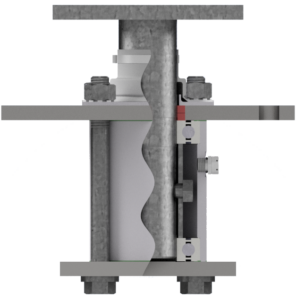
- Sealed, hydrophobically vented maintenance-free bearing
assembly - Hot-dip galvanized steel base
- Rotating insulator stop
Engineered for Performance
We apply this approach from material selection to mechanical design. All Cleaveland/Price CB-A and CB-AV switch current-carrying parts are fabricated from high-strength, high-conductivity aluminum or copper. Switch performance is not compromised by flaws that could occur in the casting process. To assure product quality, all incoming material is tested for conductivity and composition verification. Every current carrying part is made in the United States at the Cleaveland/Price manufacturing facility for maximum quality control.
Adjustment Features
Operating Pipe Adjustment
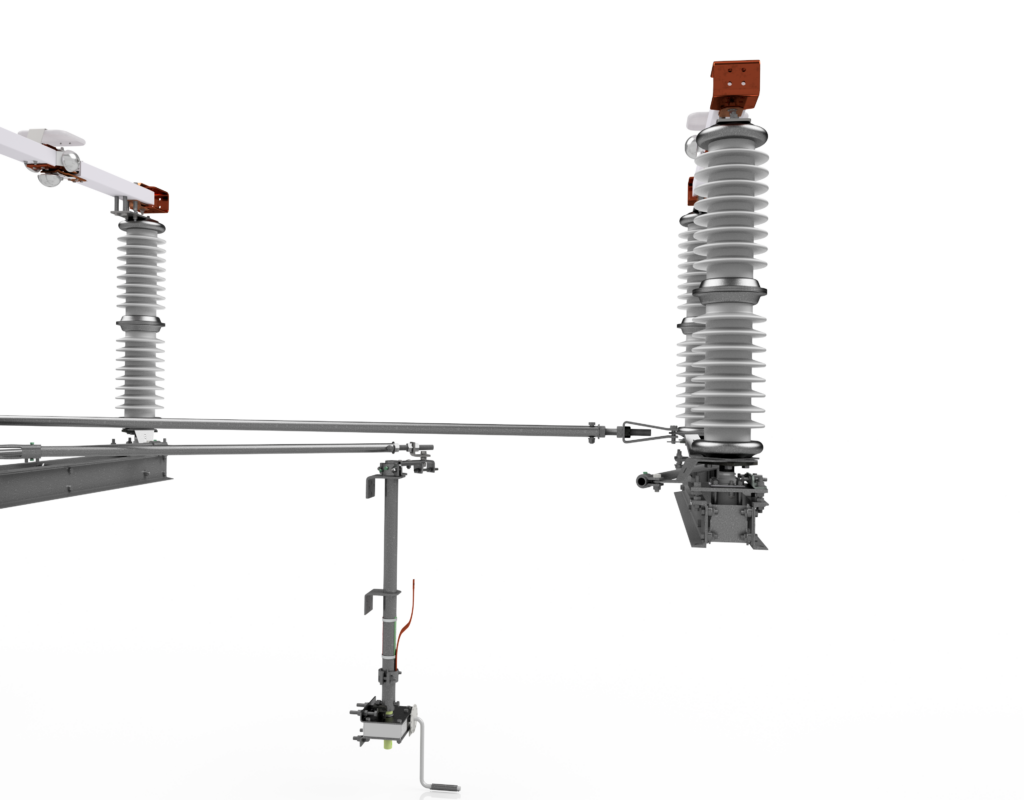
Threaded adjustments allow for quick and precise switch setup. Not only are the interphase and drive pipes of the operating mechanism supplied with adjustable threaded rod ends, the drive lever has a threaded adjustable radius as well. No special tools are required.
Live Part Adjustment
CB-AV pole units are shipped from the factory pole unit assembled with insulators and are completely adjusted. Should conductor tension move the switch contacts out of alignment, live part adjustments can be made by using the jacking bolts provided at the base of the switch. By using the additional jacking bolts at the blade hinge, the blade tip contacts can be lowered or raised until the contacts
are perfectly aligned.