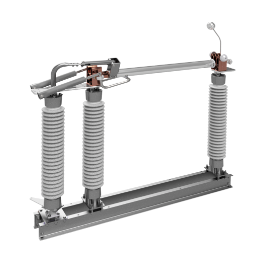
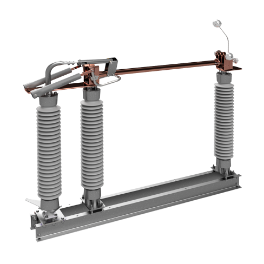
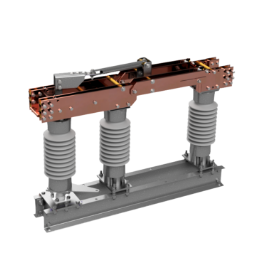
Vertical Break Switch
V2-CAV
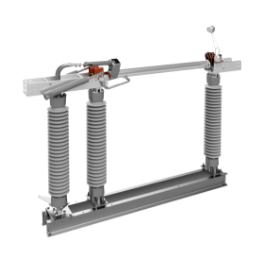
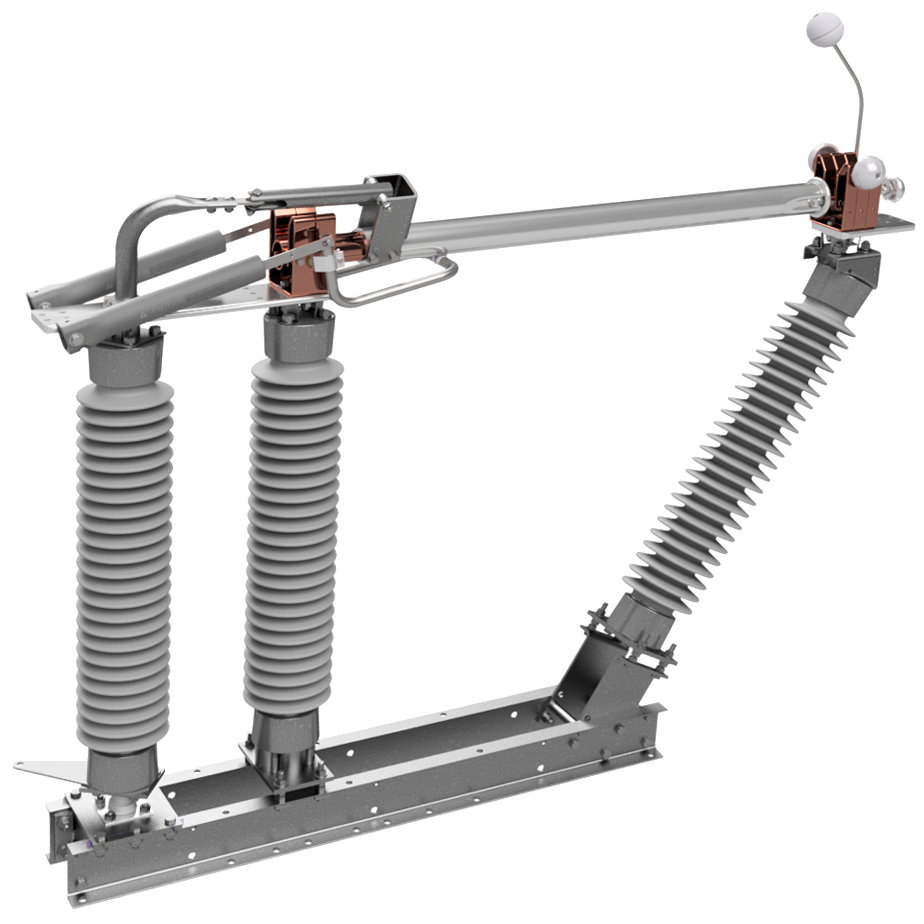
The V2-CAV uses the same live parts as the V2-CA, however, the jaw end insulators are inclined. By having the jaw end insulators inclined, the cable conductors establish electrical clearance from the base at the jaw end without the need for wire guides or outriggers.
The inclined insulator design makes the switch better suited for low profile substations where a vertical break switch is desired. It is also ideal for transmission applications where conductor spacing is close and load interrupting devices are required.
This design is available from 23 kV through 230 kV.
Quality Construction
- Unbreakable non-cast hinge end terminal pads with NEMA standard hole pattern
- Unbreakable non-cast operating crank
- Insulating journal bearing for the operating crank
- Stainless steel counterbalance springs
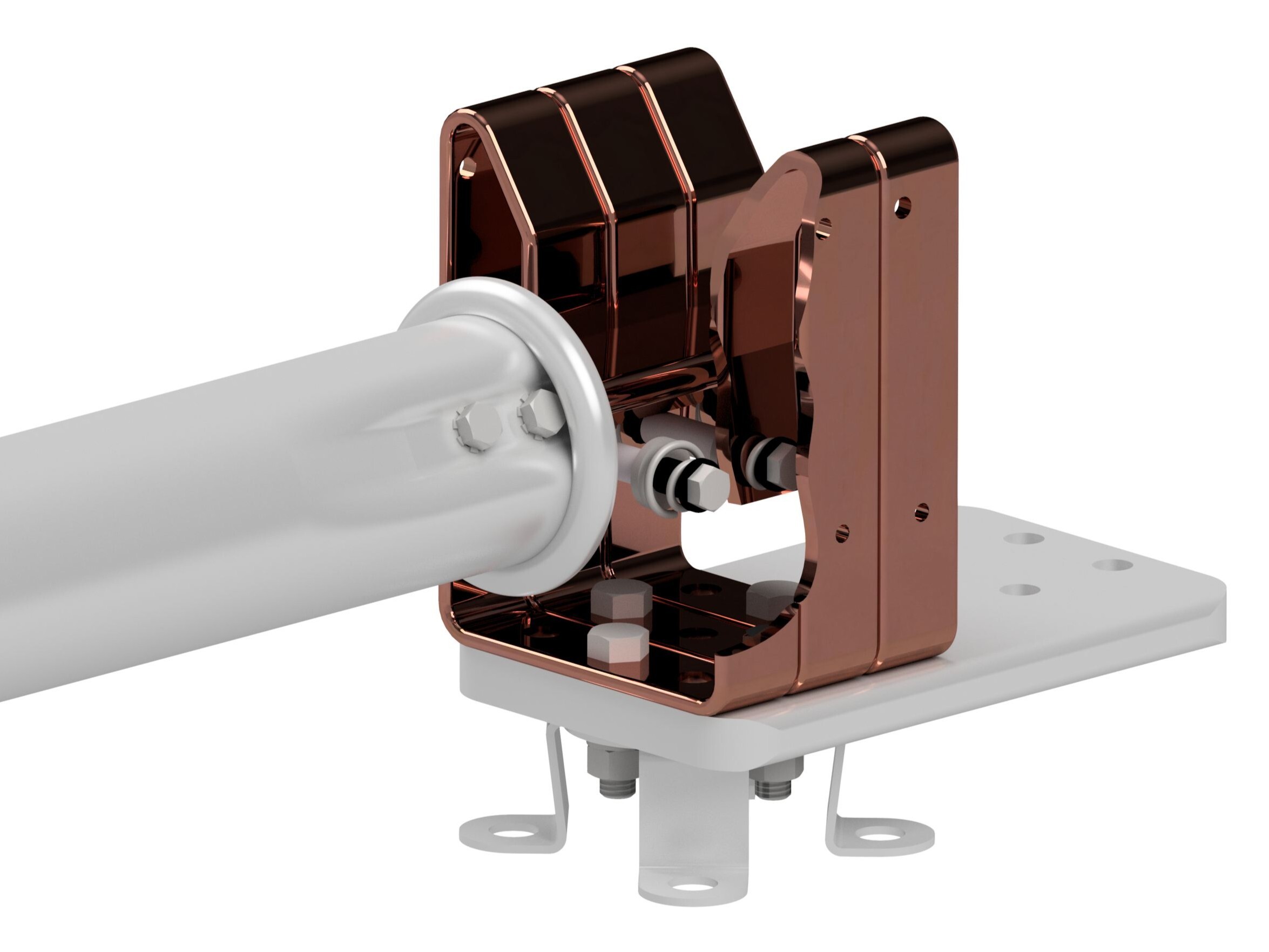
- Tin-plated, high-conductivity copper hinge end contact fingers
- Reverse-loop, silver-to-silver contacts
- Stainless steel contact springs located outside of the current path
- Aluminum corona rings
- Unbreakable non-cast jaw end terminal pads with NEMA standard hole pattern
- Tin-plated, high-conductivity copper jaw end contact fingers
- Reverse-loop, silver-to-silver contacts
- Stainless steel contact springs located outside of the current path
- Aluminum corona rings
- Arc horns with corona spheres
Engineered for Performance
Cleaveland/Price has a very basic approach to design . . . keep it simple. It is an approach that is employed from material selection to mechanical design. The Cleaveland/Price V2-C disconnect switch current carrying parts are manufactured from high strength, high conductivity copper. All switches are of non-cast design for superior dependability of parts. Switch performance is not troubled by flaws that could occur in the casting process.Contacts are designed to take advantage of electromagnetic forces by using a reverse loop configuration at both the hinge and jaw of the switch. Current transfer points are kept to a minimum.
Blade Turnover
Innovation for Full Contact Pressure
Traditional Problem
When the blade on a conventional switch rotates to the final closed position in the break-jaw, it does not consistently stop at the point of optimum contact pressure.
Many switches use a stop on the rotating insulator to set the blade position in the break-jaw. This type of stop is too distant from the blade to accurately control the blade motion, due to the cumulative play of the multiple linkage points. Additionally, inconsistent operating speeds can negatively affect proper blade turnover and position in the break-jaw. These fundamental design weaknesses lead to inadequate contact pressure that eventually causes contact pitting, burning, and failure.
Innovative Solution
Instead of locating the blade stop on the rotating insulator, the Cleaveland/Price 500 kV V2-CA blade stop is factory-machined directly into the blade at the hinge. This superior location of the blade stop removes all cumulative linkage play and ensures accurate blade rotation in the break-jaw; therefore, consistently completing the closed operation at the precise point of achieving maximum contact pressure, no matter how slow or fast the switch is operated.
The cutaway view shows how the unique Cleaveland/Price turnover stop allows the blade to rotate until the factory-machined slot in the blade engages with the hinge pin. This results in a consistent and highly accurate blade turnover angle with full contact pressure for every operation.
Patented Break-Jaw Design
The Conventional Break-Jaw Problem
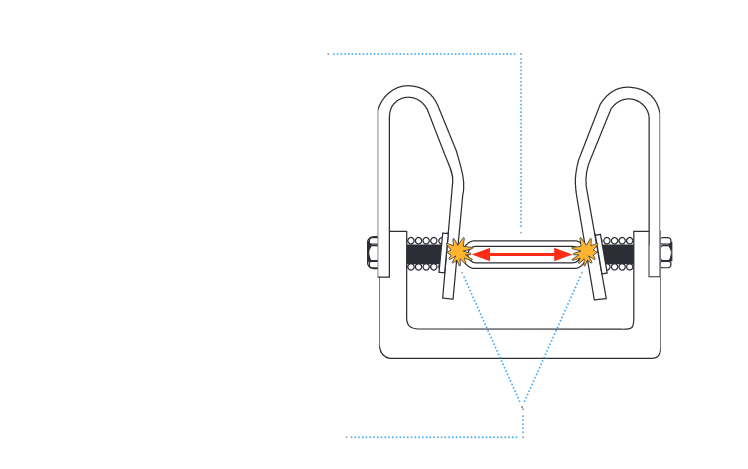
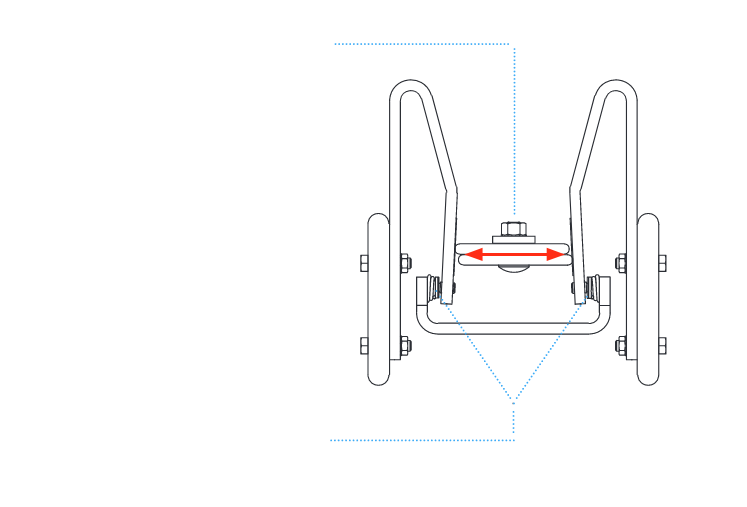
Conventional break-jaw designs lose contact pressure during short circuits due to inferior placement of the contact springs.
The forces generated under short circuits create a side-to-side movement of the blade within the break-jaw, causing a make-and-break action between the blade and jaw contacts, resulting in arcing, pitting, and burning of the switch contacts.
The Innovative Solution by Cleaveland/Price
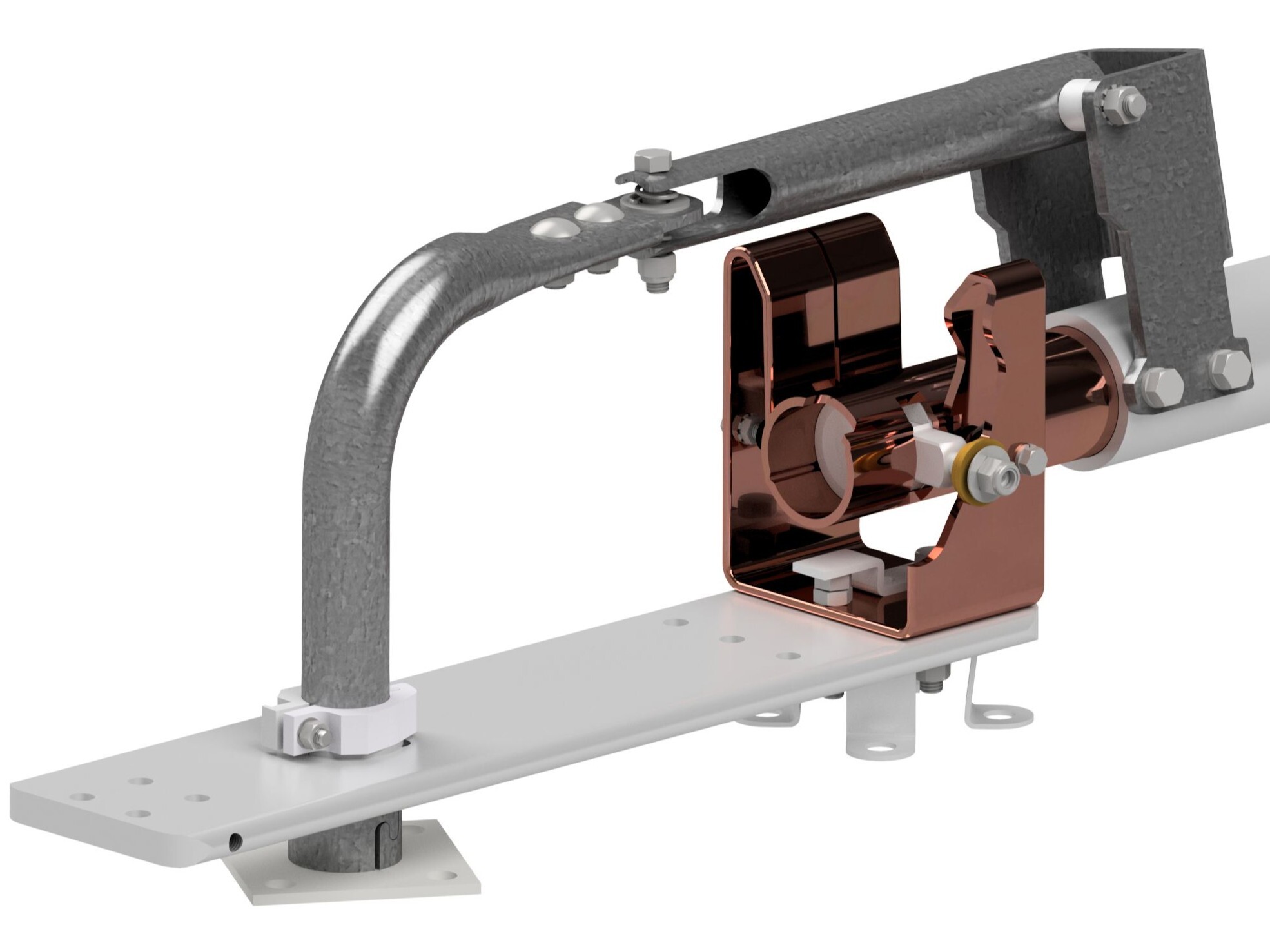
The superior Cleaveland/Price 500 kV V2-CA break-jaw design maintains a constant high-contact pressure as the blade moves side-to-side and increases during short circuits by working in unison with the electromagnetic forces generated by the current path.
The ideal location and design of the contact springs join the contact fingers together, allowing the switch contacts to move side-to-side with the blade during short circuits. This floating contact spring system maintains contact spring pressure during side-to-side movement, while maintaining a constant electrical connection to ensure no arcing of contacts.
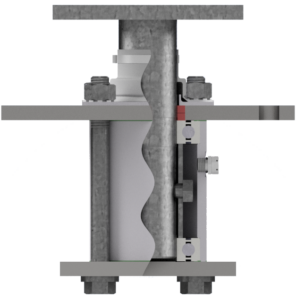
StayDry® Bearing
By the Numbers (Ratings)
| V2-CAU | Voltage Ratings | Amperage Ratings | |||||
|---|---|---|---|---|---|---|---|
| Catalog Number | Nominal Voltage (kV) | Maximum Voltage (kV) | BIL (kV) | Insulator TR No. | Continuous Current (A) | Peak Withstand Current (kA) | Short-Time Withstand Current (kA @ 3 sec.) |
| AUAB | 7.2 | 8.3 | 95 | 202 | 1200 | 99 | 38 |
| AUAD | 7.2 | 8.3 | 95 | 202 | 2000 | 164 | 63 |
| AUAF | 7.2 | 8.3 | 95 | 202 | 3000 | 195 | 75 |
| AUAH | 7.2 | 8.3 | 95 | 202 | 4000 | 195 | 75 |
| AUBB | 14.4 | 15.5 | 110 | 205 | 1200 | 99 | 38 |
| AUBD | 14.4 | 15.5 | 110 | 205 | 2000 | 164 | 63 |
| AUBF | 14.4 | 15.5 | 110 | 205 | 3000 | 195 | 75 |
| AUBH | 14.4 | 15.5 | 110 | 205 | 4000 | 195 | 75 |
| AUCB | 23 | 27 | 150 | 208 | 1200 | 99 | 38 |
| AUCD | 23 | 27 | 150 | 208 | 2000 | 164 | 63 |
| AUCF | 23 | 27 | 150 | 208 | 3000 | 195 | 75 |
| AUCH | 23 | 27 | 150 | 208 | 4000 | 195 | 75 |
| AUDB | 34.5 | 38 | 200 | 210 | 1200 | 99 | 38 |
| AUDD | 34.5 | 38 | 200 | 210 | 2000 | 164 | 63 |
| AUDF | 34.5 | 38 | 200 | 210 | 3000 | 195 | 75 |
| AUDH | 34.5 | 38 | 200 | 210 | 4000 | 195 | 75 |
| AUEB | 46 | 48.3 | 250 | 214 | 1200 | 99 | 38 |
| AUED | 46 | 48.3 | 250 | 214 | 2000 | 164 | 63 |
| AUEF | 46 | 48.3 | 250 | 214 | 3000 | 195 | 75 |
| AUEH | 46 | 48.3 | 250 | 214 | 4000 | 195 | 75 |
| AUFB | 69 | 72.5 | 350 | 216 | 1200 | 99 | 38 |
| AUFD | 69 | 72.5 | 350 | 216 | 2000 | 164 | 63 |
| AUFF | 69 | 72.5 | 350 | 216 | 3000 | 195 | 75 |
| AUFH | 69 | 72.5 | 350 | 216 | 4000 | 195 | 75 |
| AUGB | 115 | 123 | 550 | 286 | 1200 | 99 | 38 |
| AUGD | 115 | 123 | 550 | 286 | 2000 | 164 | 63 |
| AUGF | 115 | 123 | 550 | 286 | 3000 | 195 | 75 |
| AUGH | 115 | 123 | 550 | 286 | 4000 | 195 | 75 |
| AUHB | 138 | 145 | 650 | 288 | 1200 | 99 | 38 |
| AUHD | 138 | 145 | 650 | 288 | 2000 | 164 | 63 |
| AUHF | 138 | 145 | 650 | 288 | 3000 | 195 | 75 |
| AUHH | 138 | 145 | 650 | 288 | 4000 | 195 | 75 |
| AUJB | 161 | 170 | 750 | 291 | 1200 | 99 | 38 |
| AUJD | 161 | 170 | 750 | 291 | 2000 | 164 | 63 |
| AUJF | 161 | 170 | 750 | 291 | 3000 | 195 | 75 |
| AUJH | 161 | 170 | 750 | 291 | 4000 | 195 | 75 |
| AUKB | 230 | 245 | 900 | 304 | 1200 | 99 | 38 |
| AUKD | 230 | 245 | 900 | 304 | 2000 | 164 | 63 |
| AUKF | 230 | 245 | 900 | 304 | 3000 | 195 | 75 |
| AUKH | 230 | 245 | 900 | 304 | 4000 | 195 | 75 |
| AUKB | 230 | 245 | 1050 | 312 | 1200 | 99 | 38 |
| AUKD | 230 | 245 | 1050 | 312 | 2000 | 164 | 63 |
| AUKF | 230 | 245 | 1050 | 312 | 3000 | 195 | 75 |
| AUKH | 230 | 245 | 1050 | 312 | 4000 | 195 | 75 |
| AUKB | 345 | 362 | 1300 | 324 | 1200 | 99 | 38 |
| AUKD | 345 | 362 | 1300 | 324 | 2000 | 164 | 63 |
| AUKF | 345 | 362 | 1300 | 324 | 3000 | 195 | 75 |
| AUKH | 345 | 362 | 1300 | 324 | 4000 | 195 | 75 |
| AUKB | 500 | 550 | 1800 | 391 | 1200 | 99 | 38 |
| AUKD | 500 | 550 | 1800 | 391 | 2000 | 164 | 63 |
| AUKF | 500 | 550 | 1800 | 391 | 3000 | 195 | 75 |
| AUKH | 500 | 550 | 1800 | 391 | 4000 | 195 | 75 |
Vertical Break
Superior Reliability and Dependability.
Made from the finest materials, all of Cleaveland/Price’s vertical switches are of non-cast design for superior dependability of parts—the total non-cast design eliminates flaws that can occur in the casting process–and enhanced reliability through the design.